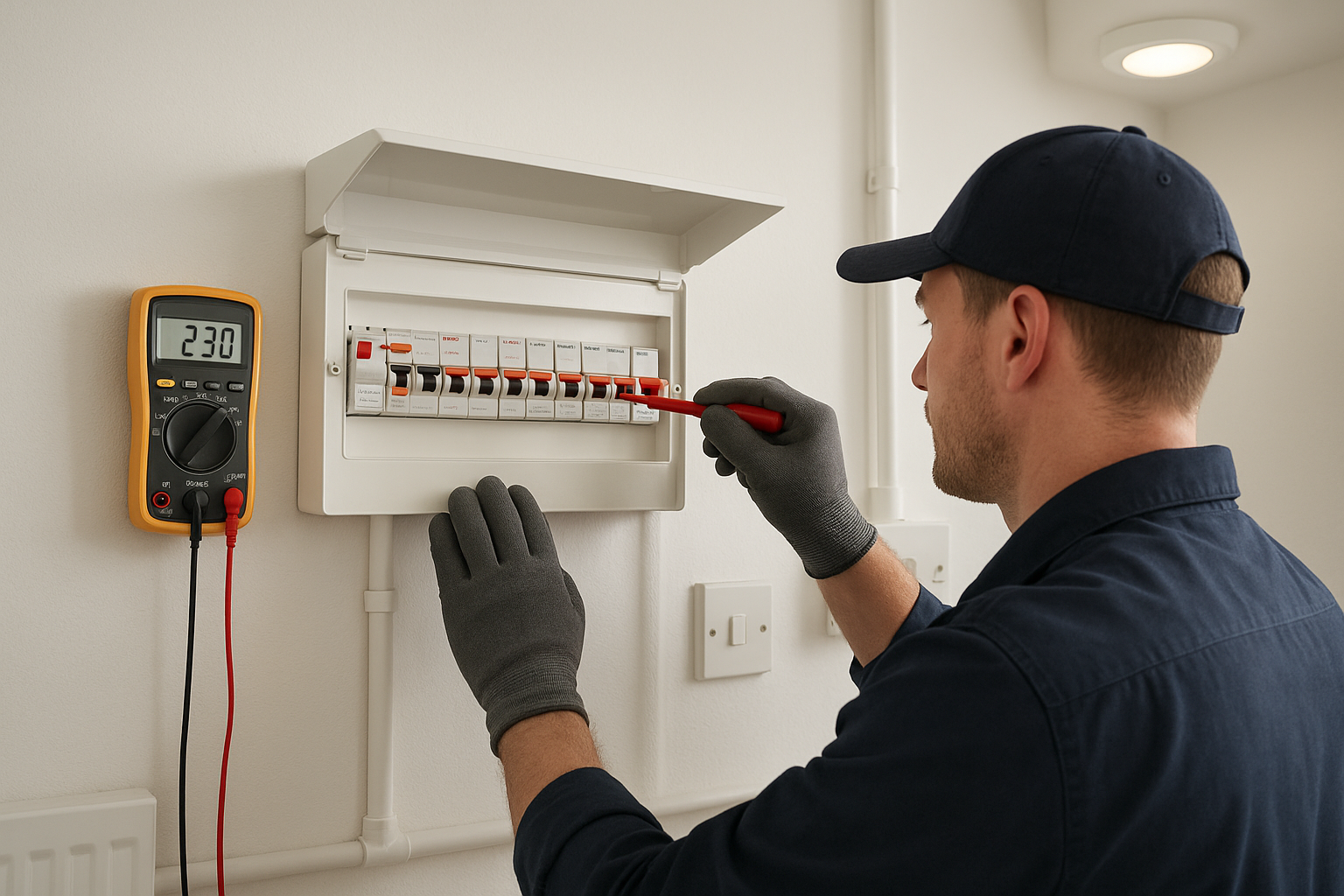
If you need fuse box repair in Mayfair, Electric Envoys provides practical fault finding, breaker investigation and fuse board safety checks for homes, flats, shops and offices across the W1J area. We work on common problems such as a fuse box that keeps tripping, a breaker that will not reset, buzzing or hot fuse boards, half the property losing power, and older fuse wire boards that need careful attention.
This service is especially relevant for landlords and property managers who need a clear record of what has been found, what needs attention, and whether a tenant can safely keep using part or all of the installation. In rental properties, electrical issues can affect access arrangements, tenant safety, maintenance planning and EICR follow-up work. Where a fault has been reported, the safest approach is to switch off affected circuits at the consumer unit if it is safe to do so, keep clear of damaged equipment, and arrange an electrician to inspect the installation.
We are based at 29 Berkeley Square, London W1J 5BF, UK and cover Mayfair and nearby areas including Marylebone, Soho, Piccadilly, Belgravia and Hyde Park. Local work often involves Victorian terraces, converted flats, older rewires, modern apartments, and commercial premises around Bond Street Station, Mount Street, Berkeley Square and Grosvenor Square. We also support landlords and property managers who need prompt, documented electrical advice before arranging repairs or tenant access.
Call 020 3633 2534 or email info@mayfair-electricians.co.uk to request a visit today.
Fuse Box Fault Finding in Mayfair
Fuse box fault finding in Mayfair starts with understanding whether the issue is a single appliance, one circuit, or the whole consumer unit. In many properties, especially older Mayfair flats and period buildings, a fault can show up as repeated loss of power, an appliance circuit that trips under load, or a board that feels warm and sounds unusual. In some cases the cause is straightforward, such as a damaged accessory, loose connection, failed breaker, or a problem on a lighting or socket circuit. In others, the fault may be linked to age, overload, moisture ingress, or previous alterations.
For landlords and managing agents, fault finding is often about more than restoring power. It is also about recording what has been tested, identifying whether the issue is isolated, and deciding if tenant occupation can continue safely while repairs are arranged. If a tenant reports that the fuse box keeps tripping, it is sensible to ask what was being used at the time, whether the fault is constant or intermittent, and whether any burning smell, heat, or buzzing has been noticed. Those details help build a clearer picture before the inspection.
Electric Envoys can investigate fuse box faults affecting lighting, sockets, kitchen circuits, heating controls and external supplies. We also look at whether the consumer unit itself is suitable for the installation and whether there are signs that the board needs repair, replacement or further testing. Where there is visible damage, the safest action is to leave the area isolated and arrange a professional inspection rather than repeatedly resetting the breaker.
Recent local work has included a kitchen wiring inspection in Hyde Park after nuisance tripping, a replacement light fitting support visit in Marylebone, and an intermittent lighting fault repair in Soho. Those jobs show the kind of practical issues that often sit behind a fuse box complaint: the fault may appear to be at the board, but the root cause is often elsewhere in the circuit or equipment connected to it.
Tripping Breaker Investigation in Mayfair
A tripping breaker investigation in Mayfair is usually needed when a circuit will not stay on, or when the same breaker trips again after reset. That can happen with sockets, lighting, kitchen appliances, immersion heaters, or external equipment. Sometimes the breaker is doing its job and protecting the circuit from overload or a fault. The task is to find out why it is operating and whether the installation is safe to use in its current condition.
For property managers, this is often urgent because a tripping breaker can affect multiple occupiers, common parts, or essential services. A tenant may report that half the house has no power, or that a specific room loses power when a particular appliance is used. In a flat above a shop or in a converted building, the symptoms may be more complex because the wiring has been altered over time. Older rewires, added sockets, replacement lighting and mixed-age equipment can all contribute to an intermittent fault.
Our investigation approach is practical and evidence-led. We check the pattern of tripping, inspect the relevant circuit and equipment, and look for clues such as heat damage, loose terminations, overloaded accessories, or signs of a failing device. If the breaker will not reset, that can indicate a persistent fault that should not be forced back on. If a landlord or managing agent needs a written summary for records, we can explain the likely issue and outline the next safe step.
For rental properties, access is a key part of breaker investigation. Tenants may need notice, or an arranged appointment, especially where the fault is inside a flat or behind furniture. Clear communication helps reduce delays and avoids repeated call-backs. If the issue affects a tenant’s ability to use the property normally, it is often best to deal with the problem quickly and keep a record of the visit, findings and any follow-up recommendation.
RCD Nuisance Tripping in Mayfair
RCD nuisance tripping in Mayfair can be frustrating because it may happen without an obvious pattern. An RCD is designed to disconnect power when it detects a fault that could be dangerous, so repeated tripping should always be taken seriously. While some people describe it as nuisance tripping, the device may be responding to a genuine issue such as moisture, a failing appliance, damaged cabling, shared neutral problems, or an installation that needs further work.
In Mayfair properties, we often see a mix of older wiring and newer electrical equipment. That combination can create intermittent problems, especially where kitchen appliances, washing machines, heating controls or outdoor circuits are involved. In flats and converted buildings, the cause may also be linked to work carried out over many years by different contractors, leaving the circuit arrangement less straightforward than it first appears.
For landlords and property managers, RCD tripping should be documented carefully because it can affect tenant safety and day-to-day use of the property. If a tenant has reported repeated trips, it helps to note when it happens, what equipment was running, and whether the problem is seasonal or weather-related. Moisture-related faults, for example, may appear after rain or in damp areas such as basements, external walls or poorly ventilated spaces.
Electric Envoys can carry out fuse box fault finding in Mayfair with a focus on RCD operation, circuit separation and the equipment connected to the board. We can then advise whether the issue appears to be a faulty appliance, a damaged circuit, or a consumer unit problem that needs repair or further testing. If the installation requires work that is notifiable under Part P of the Building Regulations, that should be handled and certified appropriately by the person carrying out the work.
Where an RCD keeps tripping, do not keep resetting it repeatedly without understanding the cause. Leave the affected circuit isolated if necessary and arrange a visit so the fault can be traced properly.
Faulty Breaker Replacement in Mayfair
Faulty breaker replacement in Mayfair is sometimes the right solution, but only after the circuit has been checked and the cause of the issue understood. A breaker can fail mechanically, become unreliable, or show signs of wear after repeated operation. In some cases the breaker has been tripping because of a separate fault and needs to be replaced after that fault has been dealt with. In others, the breaker itself may no longer be operating correctly.
Property managers and landlords often need a clear distinction between a failed breaker and a wider circuit problem. Replacing the device without checking the wiring, connected equipment and load conditions can lead to repeat trips or ongoing risk. That is why breaker replacement is usually part of a wider inspection rather than a standalone swap.
In Mayfair, breaker replacement work may be needed in older consumer units, modern flats with high appliance demand, or commercial spaces where sockets and lighting are used heavily. A tenant may report that one circuit keeps failing while the rest of the property is fine. A homeowner may notice that an appliance works in one socket but causes the breaker to trip in another area. These are useful clues that help identify whether the device, the circuit, or the connected equipment is at fault.
We also consider whether the fuse board itself remains suitable. If the board is outdated, damaged, or difficult to maintain, it may be more sensible to recommend consumer unit work rather than replacing a single breaker in isolation. Any recommendation is based on the condition found on site, not on guesswork.
If you are managing a tenancy, keeping a record of the fault, the date of the visit, and any advice given can help with maintenance planning and future access arrangements. That record can also be useful if the issue reappears and needs further investigation.
Fuse Board Safety Checks in Mayfair
Fuse board safety checks in Mayfair are important for landlords, property managers, homeowners and tenants because the consumer unit sits at the centre of the electrical installation. A board that is buzzing, hot, discoloured, damaged or difficult to reset deserves attention. So does an older fuse wire board, especially where the property has been altered over time or where the age of the wiring is unclear.
Safety checks can help identify signs of wear, poor maintenance, overheating, loose connections, unsuitable devices, or circuit labelling that no longer reflects the current layout. In rental properties, this is particularly relevant where access has been limited or where the board is in a communal or hard-to-reach area. A landlord or agent may need to know whether the installation is safe for continued use, whether a circuit should remain isolated, and whether further testing or remedial work is needed.
In Mayfair, property types vary widely. We regularly see Victorian terraces, mansion flats, converted upper floors, modern apartments, and shops or offices close to Bond Street Station, Mount Street and Grosvenor Square. These buildings can contain a mixture of old and new electrical equipment, which makes a careful visual and functional check especially useful. A safety check may also highlight whether socket installation, lighting installation or consumer unit work should be planned alongside the repair.
For landlords, it is also sensible to keep clear records of inspections, tenant reports, access attempts and any advice given after the visit. That way, if an EICR is due or a fault returns, there is a proper paper trail showing what was found and what action was taken. If you are unsure whether the issue is urgent, treat a hot board, burning smell, or recurring trip as a reason to isolate the affected circuit and arrange professional help.
Electric Envoys also supports related electrical work in the area, including electrical repairs, electrical fault finding, emergency electrician call-outs, domestic electrician services, lighting installation and socket installation. For landlords and property managers, that means one local point of contact for faults, follow-up work and practical advice about safe use of the installation.
Call 020 3633 2534 or email info@mayfair-electricians.co.uk to book fuse box repair in Mayfair, arrange fault finding, or request a fuse board safety check.
Useful note for landlords and property managers: if a tenant reports repeated tripping, burning smells, heat, or loss of power, keep the affected circuit isolated where appropriate, avoid DIY electrical work, and arrange a proper inspection. Where repairs affect the consumer unit or fixed wiring, certification and any required Building Regulations notification should be handled correctly.
Service area: Mayfair, Marylebone, Soho, Piccadilly, Belgravia and Hyde Park.
Landmarks covered nearby: Bond Street Station, Mount Street, Berkeley Square and Grosvenor Square.